Socializing a Cavalier King Charles Spaniel With Kids, Dogs and Strangers
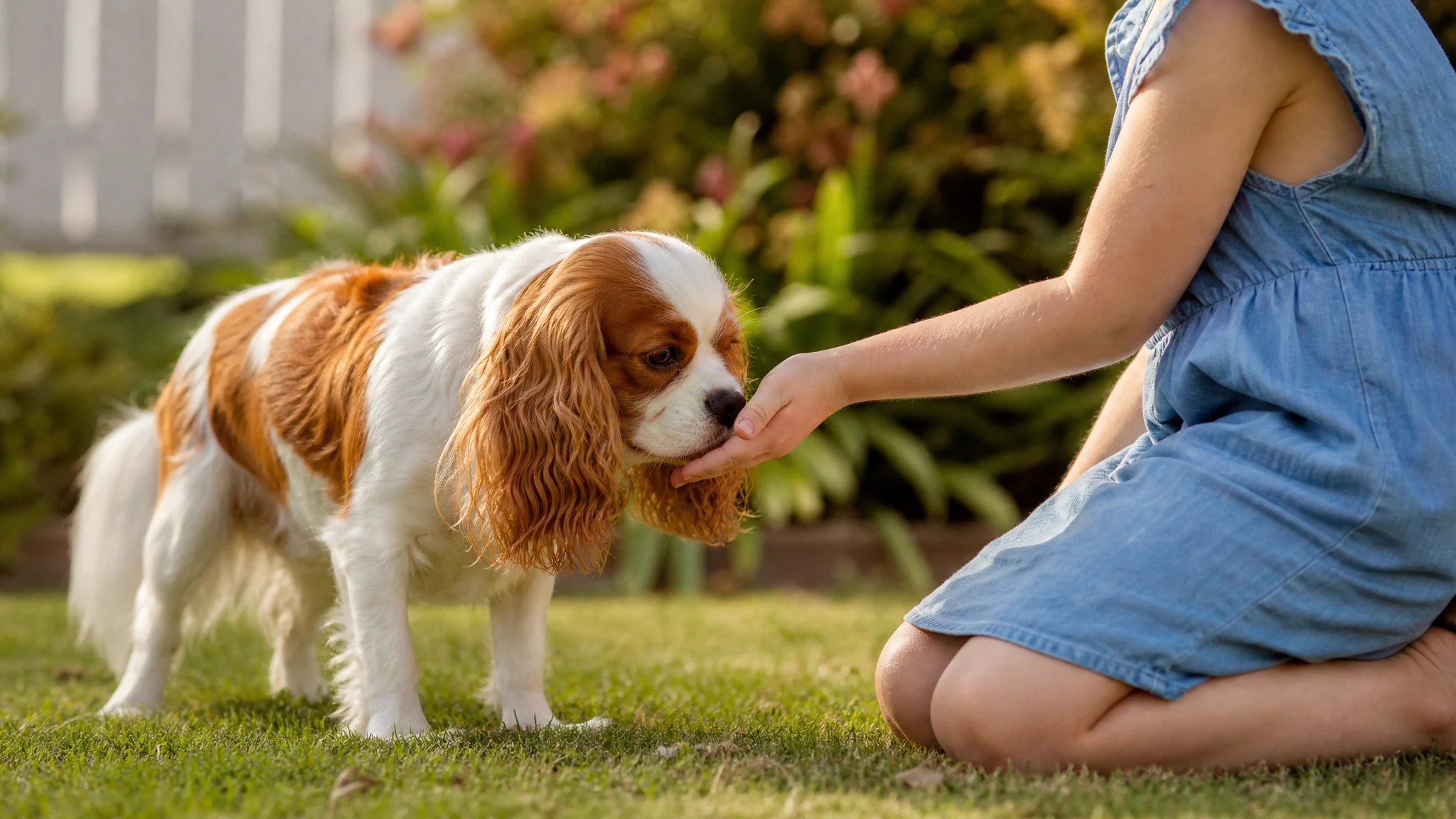
General training information. Every dog is an individual; for health or behavior concerns, see your veterinarian.
Cavalier King Charles Spaniel socialization is easier than it is with many breeds, but it still takes a plan. This breed has a reputation for sweetness. A reputation does not teach a puppy how to greet a toddler, ignore a barking dog behind a fence, or stay calm when a stranger reaches for the leash.
This guide walks you through a simple, humane routine. It uses rewards, short sessions and plenty of observation. For the basics of cues and household manners, see our complete Cavalier King Charles Spaniel training guide.
What the Breed Sources Say
The Cavalier King Charles Spaniel Club, USA (CKCSC) describes the breed as a delightfully affectionate, playful, intelligent little dog that gets along well with children, cats and other dogs. The United Kennel Club standard describes the temperament as gentle and affectionate, with no tendency toward nervousness.
The Westminster Kennel Club breed profile rates the breed 5 out of 5 for good with children and 5 out of 5 for good with other dogs. It also rates trainability 4 out of 5 and barking 3 out of 5.
So, are Cavalier King Charles Spaniels good with kids? The sources above say yes, and rate them at the top of the scale. Those are breed-level descriptions, though. Your dog is an individual, and good early experiences are what turn a friendly tendency into reliable manners.
The sources I relied on do not describe guarding or herding behavior as a breed trait. If your dog starts growling over food or toys, or nipping at running children, treat it as an individual behavior problem. Contact your veterinarian first to rule out pain or illness, then ask a qualified, reward-based trainer or veterinary behaviorist for help.
Materials You Will Need
- Small, soft treats your dog loves, cut to pea size
- A flat buckle collar or a well-fitted harness, and a standard 6-foot leash
- A mat or blanket for "settle" practice
- A baby gate or exercise pen to create a safe retreat
- A few chew toys for redirecting mouthy play
- A notebook to log what your dog met and how they reacted
- Calm, cooperative helpers: children, friendly adults and a vaccinated, well-mannered adult dog
Step-by-Step Socialization Plan
Step 1: Set up a safe base at home
Give your dog a quiet place with a bed or crate that nobody is allowed to disturb. Teach everyone in the house that when the dog goes there, they are left alone. A dog who can retreat is far less likely to feel cornered.
PetMD notes that this breed needs human company and should not be left alone for long periods. Build the base with short, pleasant stays so being apart does not become a worry.
Step 2: Start with sights and sounds
Before meeting anyone, let your dog watch the world from a comfortable distance. Sit on a bench near a quiet sidewalk, or at the edge of a park. When your dog notices a person, bicycle or stroller and stays relaxed, say "yes" and give a treat.
Keep sessions short. The breed is described as eager to please and quick to learn when sessions feel like play (PetMD and Orvis), so a few fun minutes beat one long outing.
Step 3: Teach a calm greeting with strangers
Ask the person to stand still, stay quiet and not lean over your dog. Let your dog choose whether to approach. If they do, the person can offer a treat from a flat hand or scratch under the chin.
- Ask your dog to sit before any greeting.
- Let the stranger approach only while the leash is loose.
- If your dog jumps up, the person turns away. Greet again when all four paws are on the floor.
- End the greeting while it is still going well, then move on.
Practice with a range of people over time: different ages, hats, uniforms, umbrellas and delivery packages. Variety teaches your dog that new things are usually fine.
Step 4: Introduce children with structure
Even with a friendly breed, children and dogs both need rules. Supervise every interaction, with an adult within arm's reach.
- Teach the child first. Gentle touches only, no grabbing ears, tails or feet, and no hugging or climbing on the dog.
- Seat the child. Have younger children sit on the floor and let the dog come to them. Running and squealing can overexcite a puppy.
- Let the child be the treat giver. The child drops treats on the floor or offers them from a flat hand. This builds a happy link without any pressure on the dog.
- Keep sessions brief. Stop after a few minutes, before either one gets tired or wound up.
- Leave the dog alone when asleep or eating. Make this a firm house rule.
Watch your dog's body language. Lip licking, turning away, a tucked tail, yawning or trying to leave all mean "I need a break." Open the gate or call the dog to their base, and let the child go play elsewhere.
If you have a puppy, mouthing is normal. Redirect to a chew toy and reward the moment the mouth is on the toy. Never punish with physical corrections, which can make a young dog fearful.
Step 5: Introduce other dogs gradually
Cavalier King Charles Spaniel with other dogs is a pairing the Westminster profile rates 5 out of 5, and the CKCSC says the breed gets along well with other dogs. Still, a first meeting goes best when it is controlled.
- Pick the partner. Choose a calm, friendly, vaccinated adult dog. Avoid dog parks at first, where you cannot control who arrives.
- Start parallel. Walk the two dogs side by side with space between them. Reward each for relaxed behavior.
- Allow a short sniff. Keep leashes loose, count to a few seconds, then calmly walk on together.
- Move to a neutral space. If both are relaxed, let them interact in a fenced area on neutral ground, with leashes dragging if you prefer extra control.
- Interrupt before it escalates. If play gets too rough or one dog tries to escape, call your dog away, calmly reward them and take a short break.
Ask your veterinarian when your puppy has enough vaccine protection to meet unfamiliar dogs and visit shared spaces. I do not have a verified timeline for that, and it depends on your dog's health history and local conditions.
Step 6: Add everyday environments
Once the basics go well, widen the circle. Walk past a school at a distance, sit outside a pet-friendly shop, or practice settling on a mat at a friend's house. Raise the difficulty one thing at a time: more people, then more noise, then more movement.
Exercise helps too. The CKCSC calls them active and sporting little dogs that require regular exercise. PetMD suggests two walks of 20 to 30 minutes daily, and Orvis says leisurely walks alone are not quite enough. A dog who has burned off energy is usually easier to teach and more relaxed around visitors.
Tips for Better Sessions
- Keep it positive. Reward-based training, in line with the American Veterinary Society of Animal Behavior (AVSAB), builds trust. Avoid harsh corrections.
- Quit early. Two or three good minutes are better than a long, tiring session.
- Use a marker word. A consistent "yes" tells your dog exactly which behavior earned the treat.
- Be patient with housetraining. Orvis notes the breed can be stubborn and slow to housebreak. Consistent routines matter, and visits to new places may mean extra potty breaks.
- Feed small meals to puppies. PetMD recommends feeding puppies three to four times a day to prevent low blood sugar. Bring extra treats, but ask your vet how to fit them into the daily diet.
Common Mistakes to Avoid
- Assuming friendly means finished. A good-natured breed still needs practice. Skipping it can leave gaps.
- Flooding the dog. Dragging a nervous dog into a crowd or a pile of strangers can backfire. Go at your dog's pace.
- Letting strangers rush up. Allow greetings only when your dog is calm and wants them. It is fine to say, "We're training, please wait."
- Leaving children and dogs unsupervised. Even a very gentle dog can be pushed too far by an excited child.
- Ignoring the signals. Yawning, turning away and freezing are early warnings. Respond before they turn into growling or snapping.
- Letting fear or pain go unchecked. A sudden change in behavior can have a medical cause. Ask your veterinarian rather than guessing.
Expected Results
With steady, positive practice, many owners find their Cavalier becomes calmer and more confident around new people and dogs. Results vary widely with age, past experiences and temperament, and no plan can promise a particular outcome.
You may notice your dog settling faster after greetings, taking treats gently and recovering more quickly from surprises. Treat the progress as gradual, and keep up the practice over months rather than days.
If your dog shows persistent fear, guarding of food or toys, or aggression toward children or other dogs, stop the exercises that cause it. Talk to your veterinarian, then seek a qualified reward-based trainer or veterinary behaviorist.