How to Potty Train a Cavalier King Charles Spaniel Puppy
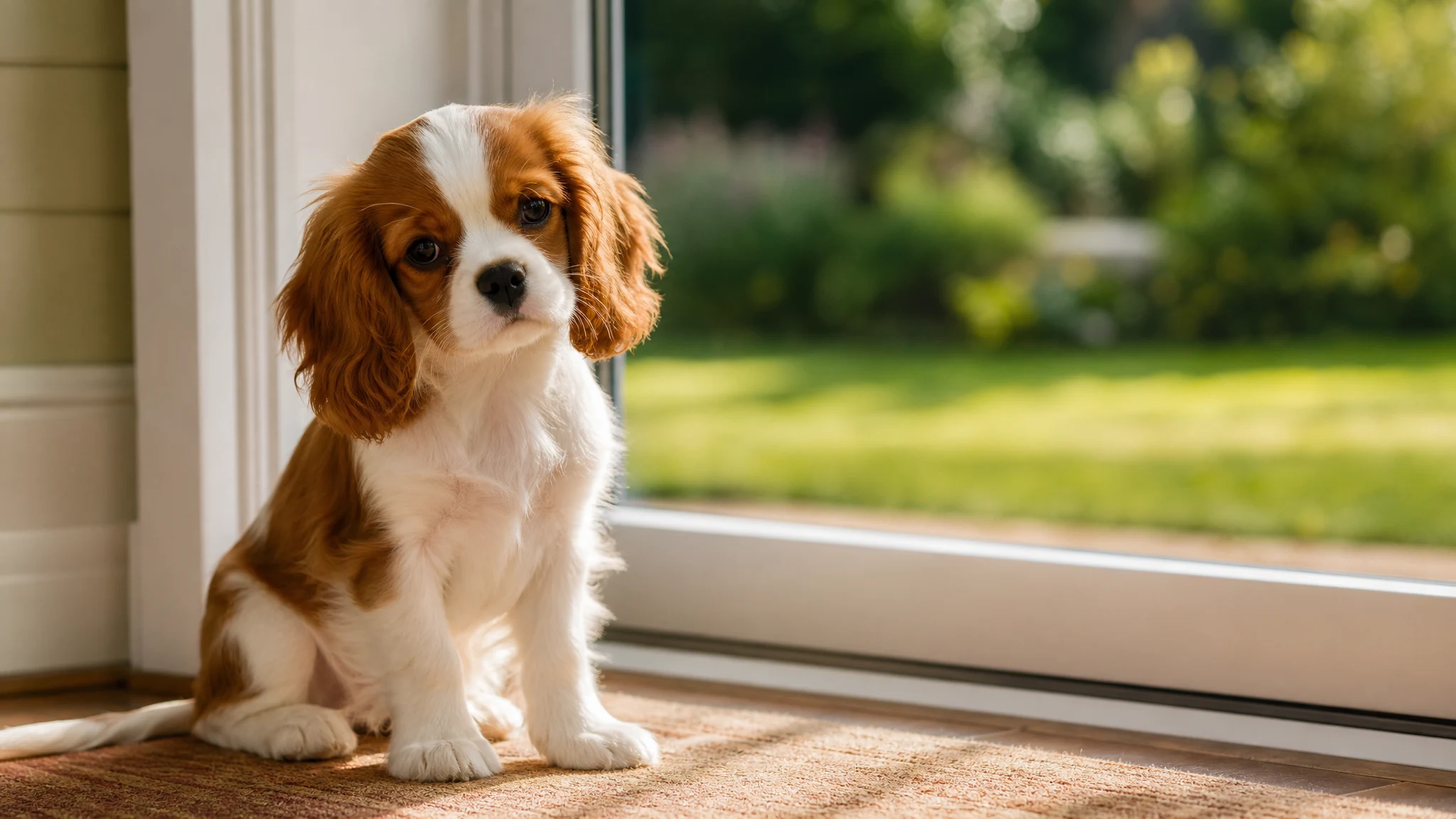
General training information. Every dog is an individual; for health or behavior concerns, see your veterinarian.
Learning how to potty train a Cavalier King Charles Spaniel starts with a plan you can repeat every day. Cavalier King Charles Spaniel potty training is mostly about management: a steady routine, a lot of trips outside, and calm rewards for getting it right.
This guide covers what you need, a step-by-step plan, a sample schedule, crate use, how to handle accidents without punishment, and what to expect along the way.
What to Know About the Breed First
House training a Cavalier King Charles Spaniel is helped by a few breed traits. Individual dogs vary, so treat these as starting points and not promises.
- Eager to please. The Westminster Kennel Club profile rates the breed 4 out of 5 for trainability and describes it as eager to learn. PetMD also calls the breed eager to please and says positive reinforcement and short, fun sessions work well.
- Small size. The United Kennel Club standard lists adults at 12 to 13 inches at the withers, averaging 12 to 18 pounds. A small dog means small messes, but it also means a puppy can slip out of sight and finish the job behind a chair very quickly.
- Slow to house train, at times. Orvis notes the breed can be stubborn and slow to housebreak. Plan for a longer road than you might hope for, and do not take setbacks personally.
- Needs company. PetMD says Cavaliers need human company and should not be left alone for long periods. That matters for potty training, because a puppy left alone too long will have accidents no matter how smart or willing it is.
The Cavalier King Charles Spaniel Club, USA describes the breed as affectionate, playful and intelligent. That is a good mix for reward-based work. Your puppy will usually want to be near you, which makes it easy to notice the signs that it needs to go.
Materials You Will Need
- A crate sized so your puppy can stand, turn around and lie down, with no extra room to use as a bathroom corner. Many owners buy one with a divider so it can adjust as the puppy grows.
- A leash and a collar or harness for every trip outside. Using the leash keeps trips boring and focused.
- Small, soft treats that your puppy can swallow quickly. Cut them tiny so the day's treats do not add up to a full meal.
- An enzyme-based cleaner made for pet messes, to remove odor from spots indoors.
- A gate or exercise pen to keep your puppy in the room where you are.
- A timer or phone alarm to keep the schedule honest.
- A notebook or app to log meals, naps, and bathroom trips for the first couple of weeks.
Pick one spot outside as the bathroom area and use it every time. The smell helps your puppy understand why you are there.
Step-by-Step: How to Potty Train a Cavalier Puppy
Step 1: Set the routine before the first accident
Decide on feeding times, outdoor trips and bedtime, and keep them close to the same every day. A predictable day makes a predictable puppy. PetMD recommends feeding puppies three to four times a day and using a growth-labeled puppy food, which also gives you regular, predictable bathroom times to plan around. Ask your veterinarian which food and portions suit your puppy.
Step 2: Take your puppy out at the right moments
Puppies usually need to go at these times:
- First thing in the morning
- Right after waking from any nap
- Soon after eating or drinking
- After a play session
- Before bed
- Any time you see sniffing, circling or sudden wandering
Carry a very young puppy outside if you need to, so it does not have an accident on the way to the door.
Step 3: Go to the same spot and stay quiet
Walk your puppy on leash to the bathroom spot. Stand still, stay calm, and give it a minute or two to sniff. Use a simple cue such as "go potty" in a flat, quiet voice. Over time the cue can become a helpful signal. Do not play, chat or wander the yard, because that teaches your puppy that outside is for fun and the bathroom can wait.
Step 4: Reward right away
The moment your puppy finishes, praise softly and hand over a treat. Timing matters. The treat has to arrive while your puppy is still outside and still connecting the reward to the act. If you wait until you are back in the house, the reward may land on the wrong behavior.
Once your puppy has gone, a short play session or a walk can be the second reward. This also teaches that going quickly earns more fun, not an instant return to the crate.
Step 5: Supervise indoors, or confine
When your puppy is not outside, it is either watched closely or in a safe, small space. That means one of these:
- On a leash tethered to you, or in the same room within eyesight
- In the crate or pen for a nap or a quiet break
Most accidents happen when no one is looking. Cavaliers like to be close to people, so keeping your puppy in the room with you is usually easy and works in your favor.
Step 6: Use the crate as a bedroom, not a punishment
Most puppies avoid soiling the space where they sleep, so a crate that is the right size can help. Make it comfortable with a bed and a safe chew toy. Feed some meals in or near the crate and toss in treats so your puppy learns it is a good place.
Do not leave your puppy in the crate longer than it can reasonably hold its bladder. Young puppies need regular trips out, including at night at first. If your puppy cries in the crate at night, take it out to the bathroom spot, keep things dull, and then return it to bed. Because the breed does best with company, many owners keep the crate in their bedroom for the first weeks.
Never use the crate as a place to send your puppy when you are angry. If it learns to dread the crate, the whole plan gets harder.
Step 7: Stretch the time gradually
When your puppy goes a few weeks with few or no accidents, add a little more freedom, one room at a time. Extend the gap between trips in small steps. If accidents return, go back a step. That is normal and does not mean you failed.
A Sample Daily Schedule
Adjust the times to your household. The pattern matters more than the clock.
| Time | What happens |
|---|---|
| Wake up | Straight outside to the bathroom spot, reward, then breakfast |
| 15 to 30 minutes after breakfast | Outside again |
| Mid-morning | Play and training, outside before and after, then a nap in the crate or pen |
| Midday | Outside on waking, lunch, outside again |
| Afternoon | Short walk or play, outside, nap |
| Early evening | Dinner, then outside soon after |
| Evening | Calm play, outside, quiet time with the family |
| Bedtime | Last trip outside, then into the crate |
| Overnight | Quiet trips out as needed for a young puppy |
If you work away from home, arrange for a family member, friend or reputable pet sitter to give your puppy a midday break. A very young puppy cannot be expected to wait through a full workday.
What to Do When Accidents Happen
Accidents are part of the process. Handle them the same way each time.
- Stay calm. If you catch your puppy in the act, make a small, neutral interruption such as a quick "oops," then scoop it up and take it outside. If it finishes there, reward it.
- Do not punish. Do not yell, swat, or push your puppy's nose into the mess. Puppies do not link a scolding after the fact with what they did earlier, and a puppy that fears you may just learn to sneak off and hide to go. That is the opposite of what you want. Humane, reward-based training is the approach supported by the American Veterinary Society of Animal Behavior.
- Clean thoroughly. Use an enzyme-based cleaner so the smell does not draw your puppy back to the same spot.
- Ask what went wrong. Was the puppy unsupervised? Did the gap between trips run too long? Was it excited after play? Adjust the plan, not the puppy.
Tips for Success
- Keep sessions upbeat. PetMD recommends short, fun training sessions, and Orvis says Cavaliers learn quickly when sessions feel like play.
- Be consistent as a household. Everyone should use the same door, spot, cue and reward.
- Go out with your puppy. Do not just open the door and let it out. You cannot reward what you do not see.
- Be patient with the stubborn streak. If your puppy drags its feet or gets distracted, stay a minute longer, stay boring, and try again. Do not turn it into a battle.
- Limit free roaming. The more of the house a puppy can reach, the more chances it has to make a mistake.
- Mind the weather. Small dogs may not want to go out in cold rain. A little cover, a warm coat, or a covered spot can make outdoor trips more appealing.
Common Mistakes to Avoid
- Giving too much freedom too soon. A puppy that has gone a week without an accident is not ready to roam the whole house.
- Leaving the puppy alone too long. Cavaliers do not do well alone for long stretches, and long gaps lead to accidents and stress.
- Rewarding late. A treat given at the door, or after coming inside, misses the moment.
- Skipping the leash. A puppy running loose in the yard may forget why it is out there.
- Using punishment or harsh corrections. These can make a sensitive, people-loving puppy wary and slow your progress.
- Quitting the schedule too early. Reliability builds slowly. Keep the routine going after the first good week.
- Using pads and the yard at the same time without a plan. Mixed signals can confuse some puppies. Pick one approach, and talk to a qualified trainer if you need a different setup for your living situation.
How Long Will It Take?
There is no single timeline, and no reputable source can promise one. Puppies differ in age, background, routine and temperament. Some Cavalier puppies catch on in a few weeks, while others take several months to be reliable. Orvis notes the breed can be slow to housebreak, so a longer timeline is not a sign that you are doing something wrong.
With a steady routine, close supervision and consistent rewards, many owners see steady progress over the first weeks. Expect good days and bad days. Treat the first several months as practice, and expect that your puppy may still need reminders after that.
When to Ask for Help
If your puppy suddenly starts having more accidents, strains, seems to be in discomfort, or drinks and urinates much more than usual, call your veterinarian. Health problems can look like training problems, and only a vet can sort them out. Orvis notes the breed is prone to heart disease, so keep up with regular checkups and ask your vet about your puppy's overall health and care.
If you have followed the plan for several weeks and are stuck, a qualified trainer who uses reward-based methods can watch your routine and help you adjust it. For breed-specific questions, the American Cavalier King Charles Spaniel Club, the AKC parent club for the breed, is a good place to start.
Final Thoughts
Potty training a Cavalier puppy comes down to routine, supervision and kind, well-timed rewards. The breed's affectionate, eager-to-learn nature is on your side, and its need for company means your puppy will usually be close enough for you to catch the signs. Stay patient through the slow days, keep trips frequent, and let each success build the next one.