Crate Training a Cavalier King Charles Spaniel and Preventing Separation Anxiety
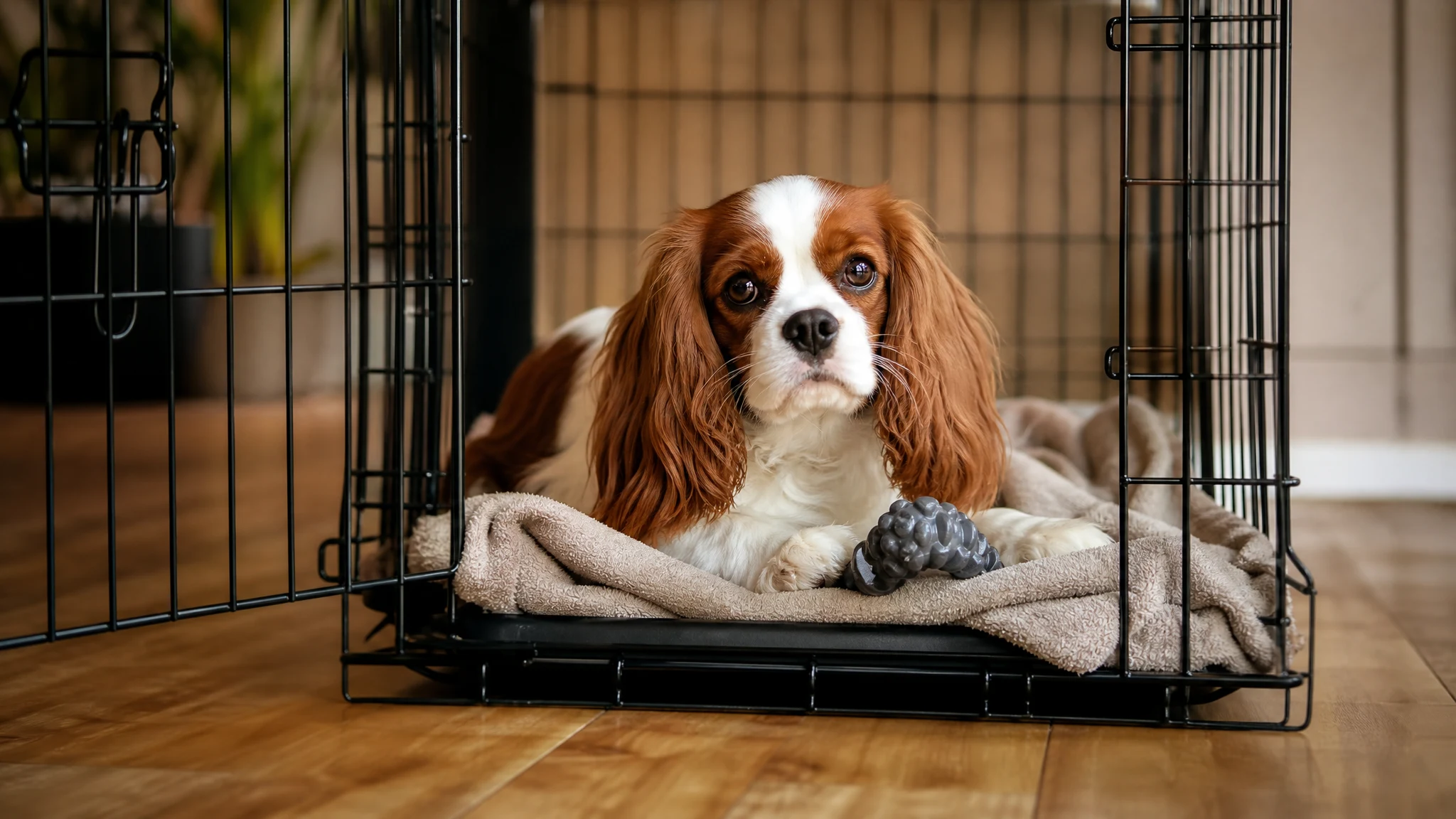
General training information. Every dog is an individual; for health or behavior concerns, see your veterinarian.
Cavaliers were bred to sit in laps. The American Cavalier King Charles Spaniel Club describes the breed's history as a companion and lap warmer to the aristocracy, the old 'Comforter Spaniel'. That job history shapes everything about crate training a Cavalier King Charles Spaniel. This is a dog that wants to be near you, so being shut in a box alone can feel like a big ask.
The good news is that this breed is also eager to please. The Westminster Kennel Club profile rates Cavalier trainability at 4 out of 5. With patience and a slow plan, the crate can become a calm, comfortable place instead of a punishment.
This guide walks through sizing, setup, step-by-step introduction and gradual alone-time practice. It also covers how to spot early signs of separation distress, and when to call your veterinarian.
Why the Crate Matters for This Breed
PetMD notes that Cavaliers need human company and should not be left alone for long periods. Orvis adds that the breed can be slow to housebreak and sometimes stubborn. A crate helps with both: it gives your dog a safe resting spot and makes house training more predictable.
It also matters for separation anxiety. A dog who has learned that a crate is a pleasant place, and that you always come back, tends to cope better when the house gets quiet. Results vary from dog to dog, and no method can promise a dog will never struggle with being alone.
Individual dogs differ. Some Cavaliers settle in within days. Others need weeks. Go at your dog's pace.
Materials You Will Need
- A correctly sized crate. See the sizing section below.
- A soft, washable mat or bed. Choose one your dog cannot easily chew apart.
- Small, soft treats. Pea-sized pieces work well for repeated practice.
- Stuffable or long-lasting chew toys. Use items sized safely for a small dog.
- A light cover or blanket for part of the crate, if your dog likes a den feel.
- A playpen or baby gate to set up a small, safe area near the crate.
- A timer or phone to track short practice sessions.
Choosing the Right Crate Size
The United Kennel Club breed standard lists the Cavalier at 12 to 13 inches at the withers, with weight averaging 12 to 18 pounds. PetMD gives 13 to 18 pounds for adults. That puts the breed in the small-dog range.
A puppy will be well under those numbers, so think about the adult size you are planning for. The general rule is that your dog should be able to stand up without ducking, turn around easily and lie stretched out comfortably. Too much extra room can make house training harder, because some dogs will use one end as a toilet.
Crate makers publish their own sizing charts, and those differ between brands. Check the chart for the crate you are considering, and match it to your dog's current height and weight. If you buy a larger crate for a growing puppy, use a divider so the space matches your dog now.
Step-by-Step: Introducing the Crate
Step 1: Set up a calm spot
Put the crate in a room where the family spends time, such as the living room or near your desk. Because Cavaliers want company, a crate tucked away in a far corner can feel like isolation. Place the mat inside and leave the door propped open or removed.
Step 2: Let your dog explore on their own terms
Toss a few treats near the crate, then just inside the door, then toward the back. Let your dog walk in and out freely. Praise quietly. Do not push or pull your dog inside. The goal of this first day or two is simply 'the crate is a place where good things happen'.
Step 3: Feed meals near and then in the crate
Start by placing the food bowl just outside the crate. Over several meals, move it a little farther inside. Once your dog eats comfortably at the back, you are ready for the door.
If you have a young puppy, remember that PetMD recommends feeding puppies three to four times a day to help prevent low blood sugar. That gives you plenty of chances for easy crate practice. Ask your veterinarian about the right food and schedule for your dog.
Step 4: Add a cue and close the door briefly
Pick a cheerful word such as 'bed' or 'crate'. Say it once, toss a treat inside and let your dog follow it. When your dog is in, give another treat, close the door for a couple of seconds, then open it before any fuss starts. Build up from seconds to a minute or two while you sit nearby.
PetMD and Orvis both point out that short, fun sessions work well for this breed. Keep each practice session brief and end on a good note.
Step 5: Offer a chew and stay close
Once your dog is relaxed with the door closed, hand over a stuffed chew toy and sit nearby. Read a book or scroll your phone. Your calm presence teaches that the crate is boring in a good way. Open the door while your dog is still relaxed, not after whining starts.
Step 6: Move around the room
Stand up, walk to the other side of the room, come back and sit down. Then step out of sight for a few seconds and return. Reward calm behavior. Increase the distance and time only when your dog stays relaxed.
Building Alone Time Without Panic
Crate training and alone-time training are related but not identical. A dog can love the crate and still dislike being left. Practice both separately, then combine them.
Step 7: Practice short departures
With your dog resting in the crate with a chew, walk out of the room, wait a few seconds and return calmly. Do not make a big greeting. Gradually extend the time: a few seconds, then half a minute, then a few minutes. Mix easy repeats with slightly harder ones so the pattern is not predictable.
Step 8: Practice leaving the house
Once your dog handles several minutes out of sight, try stepping outside and coming back. Pick up keys, put on shoes and sit back down without leaving, so those cues stop predicting a departure. Then move to short real outings.
Step 9: Exercise first, then rest
The Cavalier King Charles Spaniel Club, USA describes the breed as active and sporting, needing regular exercise. PetMD suggests two walks of 20 to 30 minutes a day, and Orvis says leisurely strolls alone may not be quite enough. A dog who has had a walk and some play is more likely to settle in the crate. Play and sniffing games count too.
Step 10: Keep the routine steady
Short crate rests during the day, even when you are home, help your dog learn that crate time is normal. Avoid using the crate only when you leave. Also avoid using it as punishment, which can sour the whole process.
Signs of Separation Distress
Some stress when you leave is common during training. The concern is a dog who cannot settle at all. Watch for:
- Persistent barking, howling or whining that does not ease
- Drooling, panting or pacing in the crate
- Scratching or chewing at the door or bars
- Refusing treats or food when left alone
- Accidents in the crate from a dog who is normally clean
- Frantic greetings or shadowing you around the house
The Westminster Kennel Club profile rates the breed's barking level at 3 out of 5, so some vocal behavior is normal. What matters is whether your dog can calm down and recover.
If you see these signs, go back a few steps in the plan. Shorten the time, reduce the difficulty and reward calm. Do not push through intense panic. Dogs can hurt themselves trying to escape a crate.
Common Mistakes to Avoid
- Going too fast. Jumping from a closed door to hours alone is the most common cause of setbacks.
- Letting a distressed dog out mid-panic. Open the door during a calm moment so crying does not become the key.
- Dramatic goodbyes and hellos. Big emotions can raise your dog's arousal. Keep both low-key.
- Using the crate as punishment. It should stay a safe place. Reward-based methods, in line with the American Veterinary Society of Animal Behavior (AVSAB), are the way to go.
- Leaving a dog crated too long. Cavaliers need company, exercise and toilet breaks. If your workday is long, arrange a visit or help from a trusted person.
- Too much crate space. An oversized crate can undermine house training.
Expected Results
With steady, gentle practice, many Cavaliers learn to relax in their crate within a few weeks. Some may become more comfortable being alone as the routine builds. Because this is a people-loving breed, some dogs may still find solitude hard and need extra time or support. Progress is rarely a straight line, and a bad day does not mean the plan has failed.
If you are working with a puppy, remember that house training can take longer with this breed, according to Orvis. Stay consistent and keep expectations realistic.
When to See a Veterinarian
Talk to your veterinarian if your dog's distress is intense, getting worse or comes with other changes. Examples include sudden house soiling in a dog who was clean, loss of appetite, self-injury, or restlessness that does not fit a training problem. Pain or illness can look like anxiety.
Orvis notes that the breed is prone to heart disease, so mention any coughing, tiring easily or breathing changes at your next visit. Only a veterinarian can diagnose a health issue or advise on treatment. For severe anxiety, your vet can also discuss options and may refer you to a qualified behavior professional. Do not give any medication or supplement without veterinary guidance.
For breed-specific health guidance, check with the American Cavalier King Charles Spaniel Club, the AKC parent club. Health screening recommendations should come from the club and your veterinarian.